PRODUCTS
Capillary Viscometers
Capillary viscometer baths for accurate kinematic viscosity testing
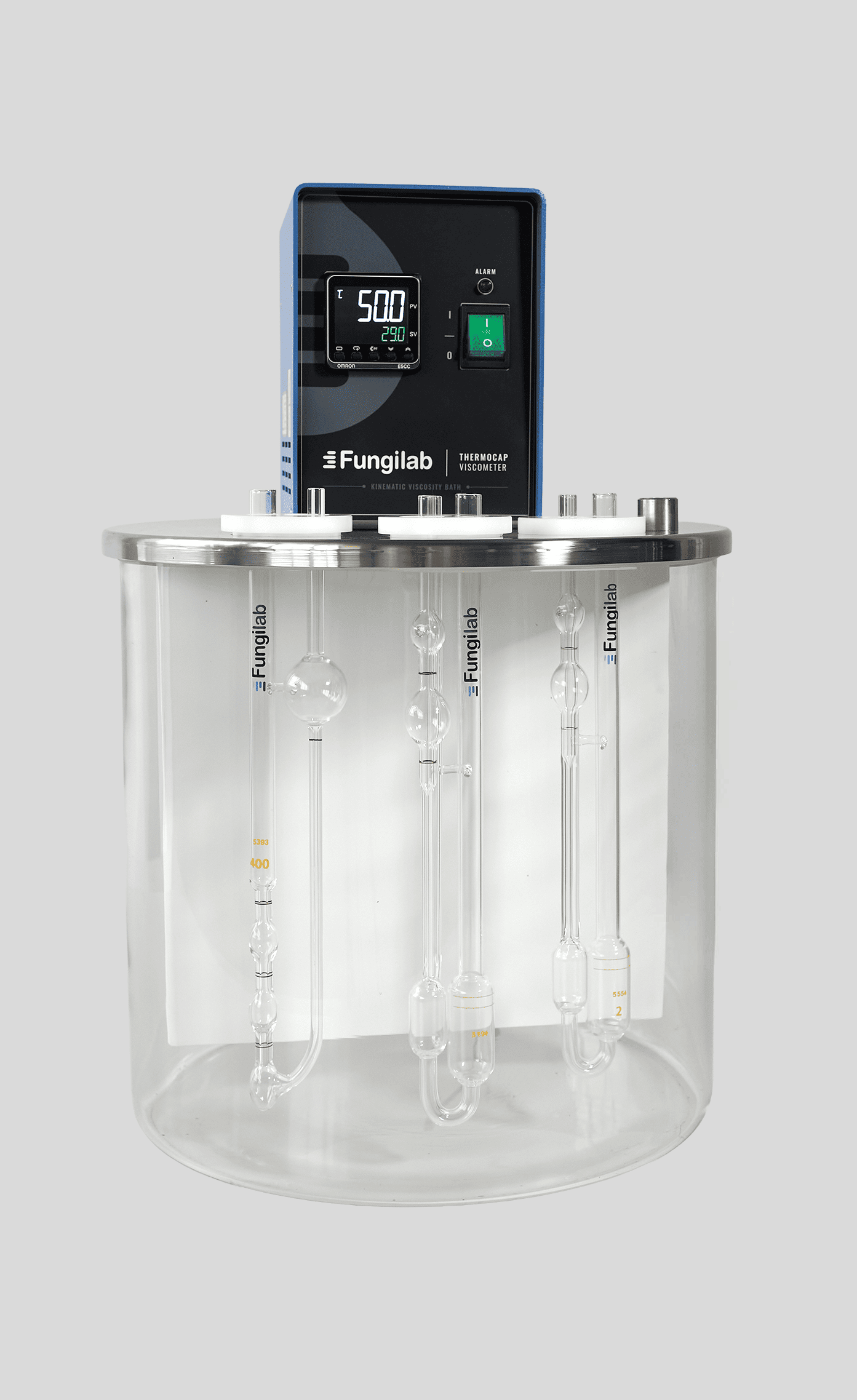
A capillary viscometer bath provides the stable temperature conditions required for accurate and repeatable kinematic viscosity measurements using glass capillary viscometers.
Fungilab THERMOCAP precision baths are specifically designed for viscosity testing according to internationally recognised ASTM and ISO standards, ensuring excellent temperature stability for laboratory, research and quality control applications.
Compatible with a wide range of capillary viscometers, THERMOCAP baths help laboratories achieve reliable, traceable and highly repeatable viscosity measurements.
Our products
Kinematic Viscosity accessories
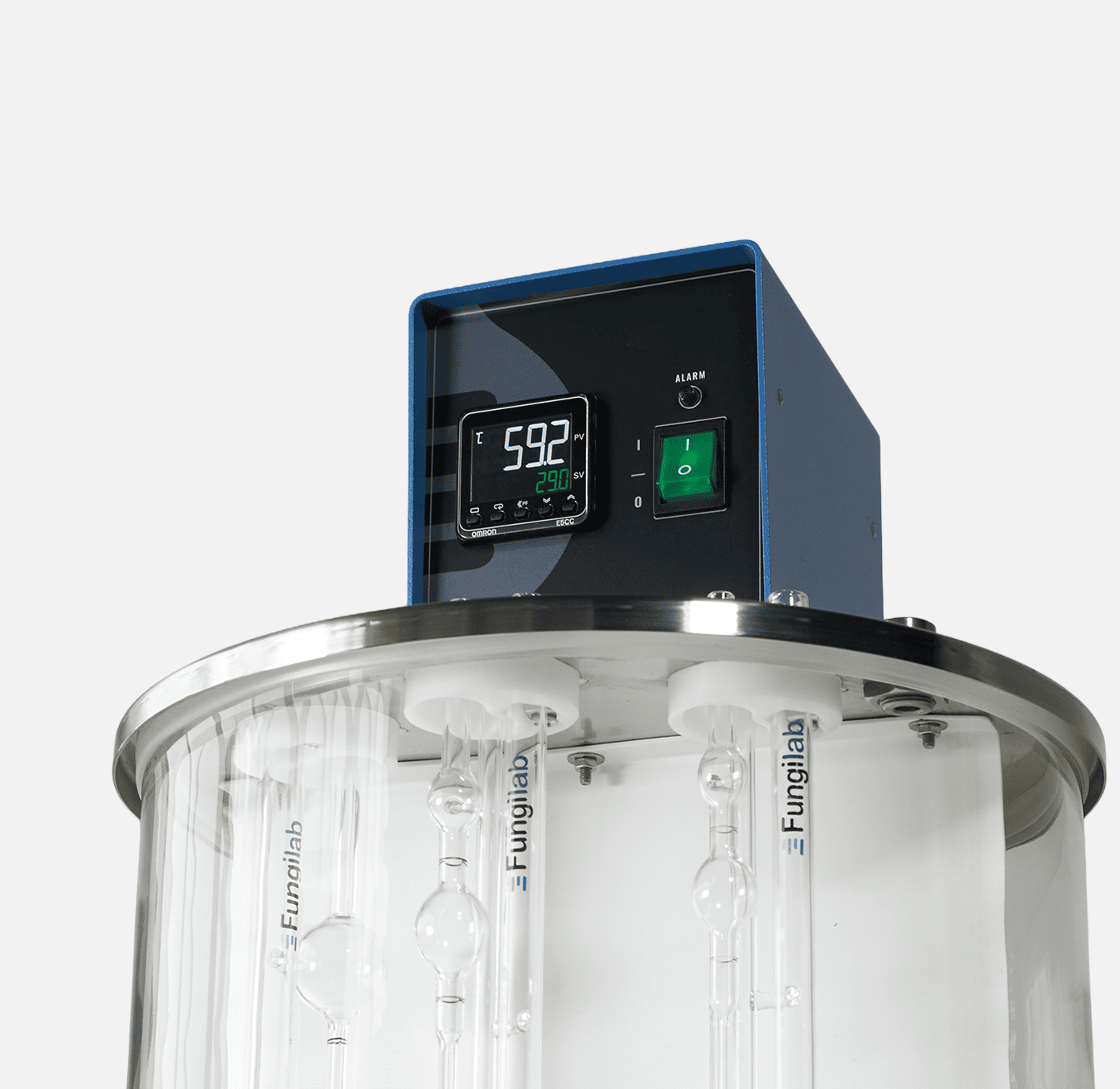
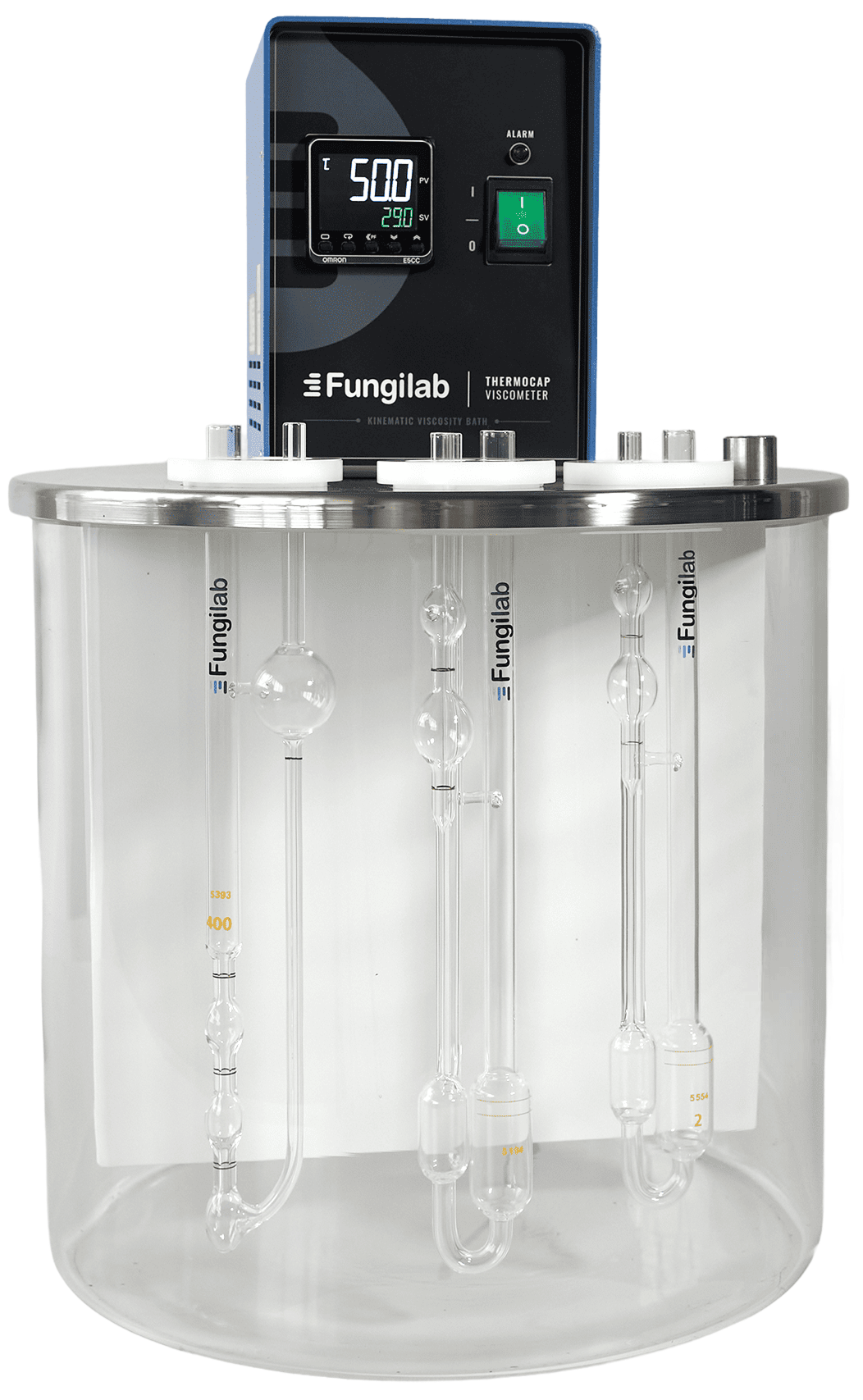
Capillary Viscometer Precision Bath THERMOCAP
FOR CONTROLLABLE TEMPERATURES FROM AMB.+5 °C TO 100 °C.
Used for measurements with glass viscometers
Made for the calibration of viscometers according to the following standards UNE 400313, ISO 3105, ASTMD 445 and 2515
FEATURES
• Temperature sensor Pt100 thermo-resistor,
• Stainless steel AISI 304 lid
• Three viscometer locations port
• Three independent lids
• Location port for the control thermometer.
NOTE: The main body of the bath is made of a 20 liters borosilicate glass tank. A white plate is located at the back to help optimise and read the viscometers.
THERMOCAP
Kinematic viscosity products
Today’s business world brings new challenges that demand innovative solutions. Fungilab’s aim, as a leading viscosity technology company, is to become an expertise partner in the viscosity world to offer you our best products and services.
To provide you and your customers with this necessary attention and an expertise support, Fungilab offers a wide range of products for the measuring of the kinematic viscosity of your products.
Our kinematic series include: the Höppler viscometer (falling ball), for the measurement of the low viscosity liquids in all industries; capillary viscometer series and baths, in accordance to ASTM and DIN methods, to obtain the most accurate viscosity of your liquids; and flow cup viscometers, suitable for paints, inks, varnishes and similar products.
Kinematic viscosity is a measure of a fluid’s resistance to flow under the influence of gravity. It’s defined as the ratio of the fluid’s dynamic (absolute) viscosity to its density. In other words, it describes how thick or thin a fluid is without the involvement of any external force except gravity.
Glass capillary viscometers for laboratory viscosity testing
Capillary viscometers remain the reference method for measuring the kinematic viscosity of Newtonian liquids in many industries. Their operating principle is based on measuring the flow time of a liquid through a precisely calibrated glass capillary maintained at a constant temperature.
The accuracy and repeatability of capillary viscosity measurements make these instruments indispensable for petroleum laboratories, lubricant manufacturers, chemical industries, pharmaceutical laboratories and research organisations.
Fungilab capillary viscometer range
Fungilab manufactures several types of glass capillary viscometers to suit different applications and sample characteristics.
- Cannon-Fenske Routine for transparent Newtonian liquids.
- Cannon-Fenske Opaque for dark and opaque Newtonian liquids.
- BS/U-Tube viscometers for transparent liquids.
- BS/IP/RF U-Tube viscometers for opaque liquids.
- Ubbelohde viscometers.
International testing standards
Fungilab capillary viscometers are manufactured in accordance with internationally recognised viscosity testing standards, including:
- ASTM D445
- ASTM D446
- ISO 3104
- ISO 3105
- UNE 400313
Temperature control for accurate measurements
Since kinematic viscosity is highly dependent on temperature, every measurement should be performed under precisely controlled thermal conditions. The THERMOCAP precision bath has been specifically developed for capillary viscometer testing, providing excellent temperature stability and measurement repeatability.
Calibration and traceability
Each Fungilab capillary viscometer is individually calibrated and supplied with its own calibration certificate, ensuring traceability and confidence in laboratory results. For routine verification of laboratory performance, Fungilab also supplies certified viscosity standard oils.
Applications
Glass capillary viscometers are widely used for measuring the kinematic viscosity of lubricants, fuels, petroleum products, solvents, chemicals and many other Newtonian liquids. Their simplicity, high precision and international standardisation make them the preferred solution for laboratory quality control and reference testing.
Choosing the right capillary viscometer
Selecting the appropriate capillary viscometer depends on the sample characteristics, expected viscosity range, transparency of the liquid and the testing standard being followed. Fungilab offers expert guidance to help laboratories choose the most suitable solution for every application.
Frequently asked questions about Capillary Viscometers
What is a capillary viscometer?
A capillary viscometer is a precision glass instrument used to determine the kinematic viscosity of Newtonian liquids by measuring their flow time through a calibrated capillary.
Which types of capillary viscometers does Fungilab manufacture?
Fungilab manufactures Cannon-Fenske Routine, Cannon-Fenske Opaque, BS/U-Tube, BS/IP/RF U-Tube and Ubbelohde capillary viscometers for a wide variety of laboratory applications.
Which standards do Fungilab capillary viscometers comply with?
They comply with internationally recognised standards including ASTM D445, ASTM D446, ISO 3104, ISO 3105 and UNE 400313, depending on the viscometer model.
Why is temperature control important during capillary viscosity measurements?
Kinematic viscosity changes with temperature, making a precision temperature bath essential for obtaining accurate and repeatable results.
Can capillary viscometers measure opaque liquids?
Yes. Reverse-flow designs such as Cannon-Fenske Opaque and BS/IP/RF U-Tube viscometers are specifically developed for measuring dark or opaque Newtonian liquids.
Does every Fungilab capillary viscometer include a calibration certificate?
Yes. Every capillary viscometer is individually calibrated and supplied with its own calibration certificate to ensure measurement traceability.
Which industries commonly use capillary viscometers?
They are widely used in petroleum, lubricant, chemical, pharmaceutical and research laboratories where accurate kinematic viscosity measurements are required.
How do I choose the right capillary viscometer?
The correct model depends on the sample transparency, expected viscosity range and applicable testing standard. Fungilab offers solutions for both transparent and opaque Newtonian liquids.