

PRODUCTS
Kinematic viscometers
Measure kinematic viscosity with confidence
Fungilab develops professional solutions for kinematic viscosity measurement, from precision glass capillary viscometers to specialized instruments and laboratory accessories. Our product range supports quality control, research and industrial testing, delivering accurate, repeatable and standards-compliant viscosity measurements across a wide variety of liquids.
Dynamic viscosity measurement for laboratory and industrial applications
Dynamic viscosity measurement is essential for evaluating how liquids and semi-solid materials resist flow under applied force. Accurate viscosity data supports product development, quality control and process optimisation across a wide range of industries.
Fungilab provides complete dynamic viscosity measurement solutions based on precision rotational viscometers, temperature control systems and specialized accessories designed to deliver reliable, repeatable and traceable laboratory results.
Whether measuring low-viscosity liquids or highly viscous materials, Fungilab offers instruments adapted to routine laboratory testing as well as demanding research applications.
Our Kinematic viscosity products
Choose the Fungilab kinematic viscometer that best matches your testing requirements, from routine quality control to standards-compliant laboratory analysis.
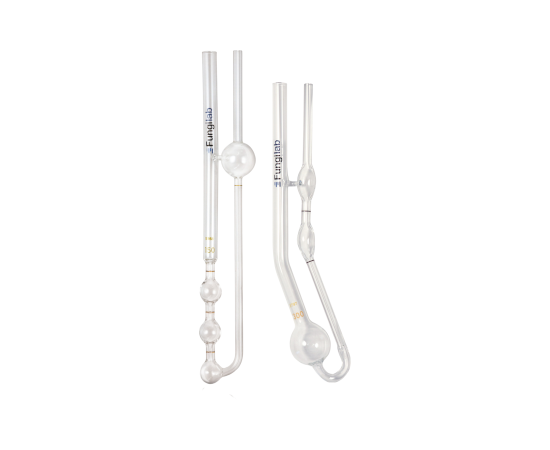
Cannon-Fenske
Routine and reverse-flow capillary viscometers for testing transparent and opaque Newtonian liquids.
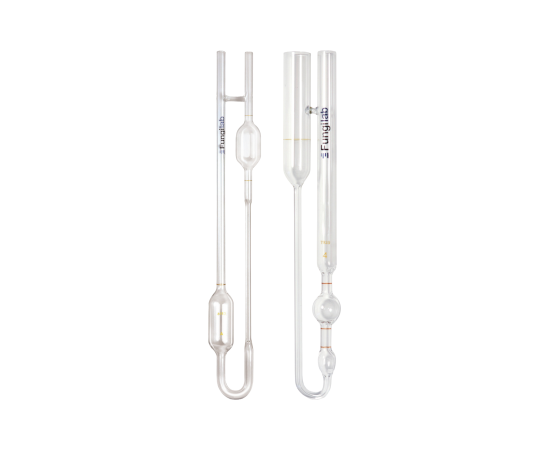
BS/U-Tube
Glass capillary viscometers for precise kinematic viscosity measurements of transparent and opaque liquids.
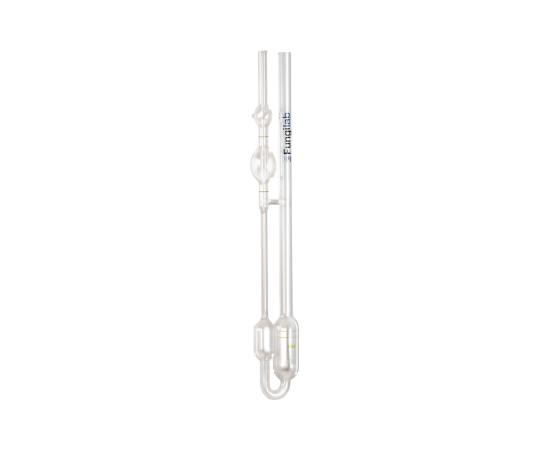
Ubbelohde
Suspended-level capillary viscometers for highly repeatable measurements independent of sample volume.
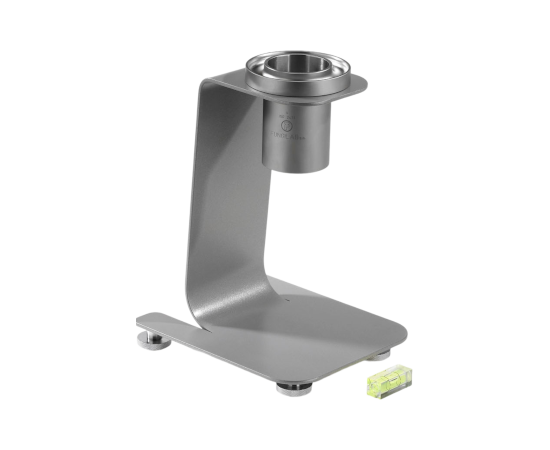
Flow Cup
Simple and fast viscosity control for paints, coatings, inks and industrial liquids.
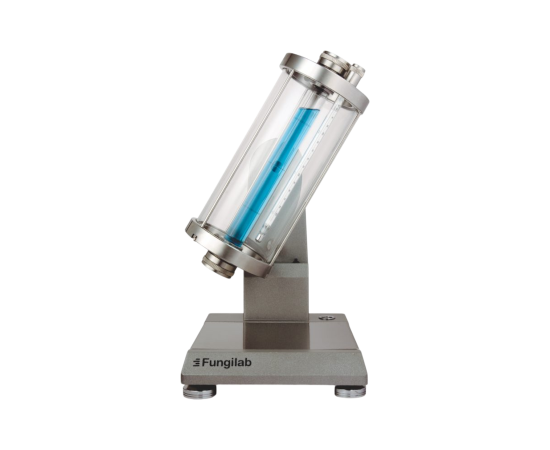
Hoppler Viscometer
Falling-ball viscometers for accurate viscosity measurement.
Kinematic viscosity accessories
Complete your kinematic viscosity measurement system with accessories designed to improve temperature control, simplify testing and ensure accurate, repeatable results.
Today’s business world brings new challenges that demand innovative solutions. Fungilab’s aim, as a leading viscosity technology company, is to become an expertise partner in the viscosity world to offer you our best products and services.
To provide you and your customers with this necessary attention and an expertise support, Fungilab offers a wide range of products for the measuring of the kinematic viscosity of your products.
Our kinematic series include: the Höppler viscometer (falling ball), for the measurement of the low viscosity liquids in all industries; capillary viscometer series and baths, in accordance to ASTM and DIN methods, to obtain the most accurate viscosity of your liquids; and flow cup viscometers, suitable for paints, inks, varnishes and similar products.
Kinematic viscosity is a measure of a fluid’s resistance to flow under the influence of gravity. It’s defined as the ratio of the fluid’s dynamic (absolute) viscosity to its density. In other words, it describes how thick or thin a fluid is without the involvement of any external force except gravity.
Professional kinematic viscometers for laboratory applications
Kinematic viscometers determine the kinematic viscosity of transparent or opaque liquids by measuring the time required for the sample to flow through a calibrated glass capillary at a precisely controlled temperature. The measured flow time is converted into kinematic viscosity using the calibration constant of the viscometer.
This measurement technique is widely recognised for its excellent accuracy and repeatability, making it the preferred method for lubricant analysis, petroleum testing and many laboratory quality control procedures.
Fungilab capillary viscometer range
Fungilab offers several types of capillary viscometers to suit different applications:
- Ubbelohde viscometers.
- Cannon-Fenske Routine viscometers.
- BS/U-Tube viscometers for transparent liquids.
- BS/U-Tube viscometers for opaque liquids.
Precision temperature control
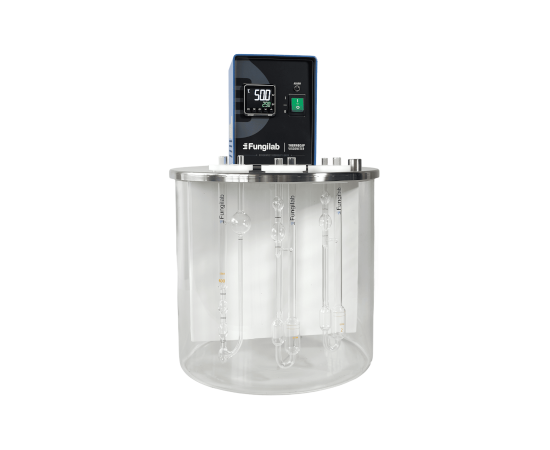
Accurate temperature control is essential because kinematic viscosity is highly temperature dependent. Fungilab provides the THERMOCAP precision bath, specifically designed to maintain exceptional thermal stability during capillary viscosity measurements.
Applications of kinematic viscometers
- Lubricating oils.
- Petroleum products.
- Hydraulic fluids.
- Industrial oils.
- Fuels.
- Chemical products.
- Research laboratories.
Calibration and verification
To maintain laboratory measurement quality, kinematic viscosity systems can be verified using certified viscosity standard oils. These reference materials help ensure traceability, instrument performance and long-term measurement reliability.
Kinematic versus dynamic viscosity
Kinematic viscosity measures the resistance of a liquid to flow under gravity, whereas dynamic viscosity measures the force required to move one layer of fluid over another. For dynamic viscosity measurements, Fungilab also manufactures professional rotational viscometers suitable for both Newtonian and non-Newtonian materials.
Frequently asked questions about Kinematic viscometers
What is a kinematic viscometer?
A kinematic viscometer measures the kinematic viscosity of a liquid by determining the time required for the sample to flow through a calibrated capillary under gravity.
Which industries use kinematic viscometers?
Kinematic viscometers are widely used in petroleum, lubricant, chemical, pharmaceutical and research laboratories.
Why is temperature control important?
Kinematic viscosity changes significantly with temperature, making precise thermal control essential for obtaining accurate and repeatable results.
Which capillary viscometers does Fungilab offer?
Fungilab supplies Ubbelohde, Cannon-Fenske Routine and BS/U-Tube capillary viscometers for both transparent and opaque liquids.
What is THERMOCAP?
THERMOCAP is Fungilab's precision temperature-controlled bath designed specifically for highly accurate capillary viscosity measurements.
How can instrument performance be verified?
Routine verification using certified viscosity standard oils helps ensure accurate, repeatable and traceable viscosity measurements.
What is the difference between kinematic and dynamic viscosity?
Kinematic viscosity measures a liquid's resistance to flow under gravity, while dynamic viscosity measures its resistance to shear when an external force is applied.
Which liquids are commonly tested with kinematic viscometers?
They are commonly used for lubricating oils, fuels, petroleum products, hydraulic fluids, industrial oils and other Newtonian liquids.
